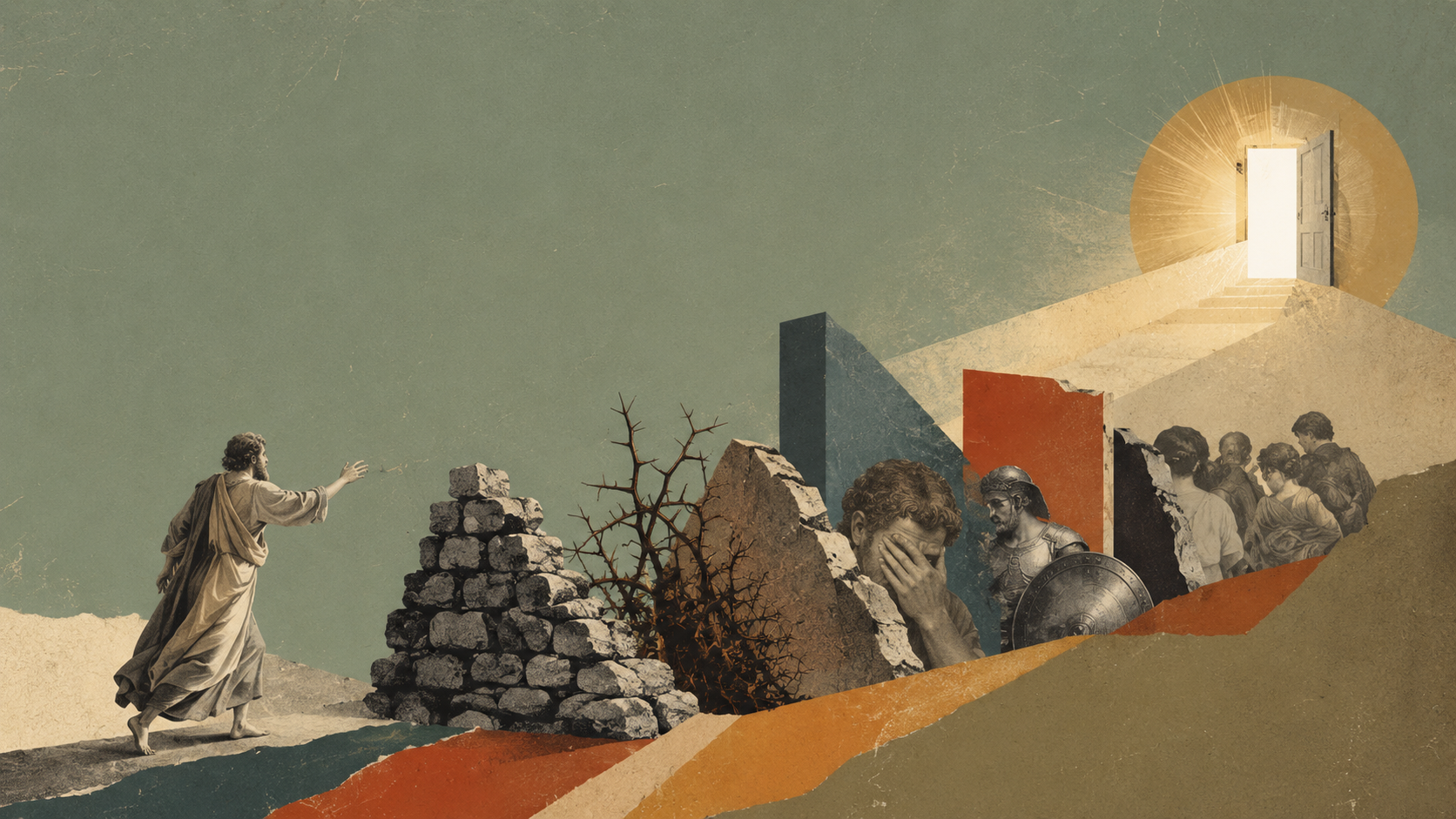
Grace is available.
That sounds simple enough, but many of us know there is a gap between believing grace exists and actually living in it. We talk about grace. We sing about grace. We believe in grace. But if we are honest, many of us are not always living as people who have truly received it.
Over time, I have come to realize something important: grace is not the problem.
God is not stingy with grace. He is not reluctant to forgive. He is not standing far off, arms folded, waiting for us to become impressive enough before He moves toward us. Grace is God’s free gift. It is His love reaching toward us before we ever reached toward Him. It is His forgiveness for the things we cannot undo. It is His presence with us in weakness, not merely after we have cleaned ourselves up. It is His power to live a transformed life.
Not a perfect life.
Not a performance-driven life.
A transformed life.
That means the question is not, “Is God giving grace?” The better question is, “What is getting in the way of me receiving it?” Because something often is. Not out there. In here.
Grace says something radically different from what many of us have learned to believe. We often think life with God is mainly about trying harder: be better, do more, fail less, hold it together. But grace says, “You are loved before you perform. Forgiven before you prove yourself. Invited before you deserve it.”
That is what makes grace beautiful.
And that is also what makes it difficult for many of us to receive.
Because grace confronts something deep inside us: the belief that we must earn everything. We want grace, but we do not always want to release what we are holding onto. We want God to come close, but only to the parts of us we are comfortable showing. We want transformation, but without disruption. We want freedom, but without surrender. We want healing, but we avoid the honesty healing requires.
So we do not always reject grace with our words.
We resist it with our lives.
1. Pride: When Self-Reliance Blocks Grace
One of the first obstacles to grace is pride.
Pride does not always look like arrogance. Sometimes pride looks like silence. It is keeping struggles private. It is carrying everything alone. It is being present physically but unavailable emotionally. It is feeling the need to prove yourself, fix everything, provide every answer, and never appear weak.
For many men especially, this runs deep. From young, many of us were taught that strength means handling things on our own. Don’t cry. Don’t look weak. Don’t let people see you struggling. Figure it out yourself.
The dangerous thing is that the world often rewards this. People praise the man who seems to have it all together. But while self-reliance may look strong outwardly, it can slowly train us to live without dependence on God.
That is where pride becomes spiritual.
Pride is not only thinking too highly of yourself. Pride is living with the assumption that you can carry your life without fully depending on God.
So we have to ask ourselves an honest question:
Where have I stopped depending on God and started depending on myself?
Grace cannot be received where there is no need, and pride works hard to make sure we never feel that need.
The way forward is honesty. We stop pretending. We stop pretending we are fine. We stop pretending we have it all together. We stop pretending strength means silence.
Pretending may protect your image, but it will slowly destroy your soul.
Pride survives in secrecy. That is why a person can sit in church for years, smile for years, serve for years, and still never truly let God into the places where they are broken.
Grace begins to flow where surrender begins.
Maybe the first step is not dramatic. Maybe it is simply praying, “God, I need You.”
Three words pride hates.
Three words grace responds to.
2. Guilt and Shame: When Hiding Blocks Grace
The second obstacle is guilt and shame.
This one runs deep.
We hear that God forgives. We hear that God loves us. We hear that Jesus died for sinners. But something inside us still says, “Not me.”
So we carry things. Mistakes. Failures. Regrets. We replay moments over and over again, as if rehearsing them enough times might somehow rewrite the past. We punish ourselves internally. We disqualify ourselves before God ever does.
We say, “God can use other people, but not me.”
So we sit back. Hold back. Stay back. Not because God said no, but because we already did.
Guilt and shame also create distance from God. We struggle to pray honestly. We struggle to worship freely. We struggle to come close because deep down we do not feel worthy.
But grace does not meet us after we have cleaned ourselves up.
Grace meets us right where we are.
That is the scandal and beauty of it.
Shame always pushes us away from God. Since the Garden of Eden, hiding has been humanity’s instinct. Adam and Eve sinned, and then they hid. That is what shame does. It whispers, “You are too dirty. You have gone too far. You should have known better. God may forgive others, but not you.”
But grace cannot heal what we continue to hide.
Healing begins when hidden things come into the light. That means honesty with God, honesty with ourselves, and sometimes honesty with another trusted brother or sister. There is power in saying, “This is what I’ve done. This is where I’m struggling. This is what I’ve been carrying.”
Shame loses power when it is brought into the light.
Grace was never for the qualified.
Grace is for the needy.
3. Fear: When Control Blocks Grace
The third obstacle is fear.
Grace requires trust, and trust feels risky.
The fear says, “If I really let go, everything will fall apart. If I surrender, I will lose control. If I stop managing every outcome, things may not go the way I need them to go.”
So instead of trusting God, we try to control everything.
And here is the irony: often this does not happen because we do not believe in God. It happens because we are afraid of what may happen if we actually trust Him.
Fear keeps us holding the steering wheel while asking God to bless the direction.
But grace invites us to release control into the hands of our loving Father.
That does not mean life suddenly becomes easy. Surrender does not remove every pressure, disappointment, unanswered question, or painful season. There will still be moments when we do not understand what God is doing.
But grace teaches us something fear never can:
When we cannot understand God’s plan, we can still trust His heart.
Fear says, “What if it falls apart?”
Grace says, “What if God holds it together?”
Fear tightens the grip.
Grace opens the hands.
Fear protects comfort.
Grace leads to transformation.
Surrender is not losing control. It is trusting the One who already has it.
So the honest question is this:
Where am I choosing control instead of trust?
4. Comfort: When Settling Blocks Grace
The fourth obstacle is comfort.
This one is subtle because it does not always feel like resistance. It just feels like staying where we are.
Grace moves us. Grace calls us forward. Grace invites transformation. But comfort says, “This is fine.”
So we settle.
We stop growing. We stop responding. We stop taking steps of faith. We stop listening closely. We stop expecting God to interrupt our lives. We stop putting ourselves in places that require faith. We stop confessing. We stop obeying quickly. We show up, but we do not open up. We participate, but we do not surrender.
Over time, we settle for manageable faith instead of transformative faith.
Not because we have rejected God, but because we have become comfortable without Him moving us.
Comfort does not usually destroy faith overnight. It slowly convinces us that where we are is enough.
But the goal of the Christian life is not comfortable maintenance. It is transformation. God loves us too much to leave us where we are.
Nobody drifts closer to God by staying comfortable.
Growth requires response.
Some of the greatest moments of transformation in our lives happen on the other side of one uncomfortable step of obedience.
So if God is stirring something in you, do not suppress it. If conviction is rising, do not ignore it. If He is calling you to take a step, respond.
Many of us are waiting for God to move while God is waiting for us to respond.
Abandon the Ship
In 1914, explorer Ernest Shackleton set out to cross Antarctica on foot. But before the expedition could truly begin, disaster struck. His ship, the Endurance, became trapped in ice. For months, the pressure built until the ship began to crack and collapse.
Eventually, Shackleton had to give a devastating order:
“Abandon the ship.”
Think about what that meant. The ship had carried them. Sheltered them. Protected them. It was familiar. It felt safe. But now the very thing that once carried them could no longer save them.
If they stayed on it, they would die.
That is a picture of what happens spiritually for many of us.
Grace is available, but we are still clinging to sinking ships.
Pride.
Guilt and shame.
Fear.
Comfort.
These are things we may have depended on for years. They may have made us feel safe. They may have helped us survive a season. But the tragedy is this: the very things we cling to for survival are often the very things keeping us from grace.
And this is where grace comes back as an invitation.
God is not standing at a distance waiting for us to get ourselves together. He is already moving toward us. In our pride. In our shame. In our fear. In our comfort. He is already there, offering grace.
The question is not whether God is willing.
The question is whether we are.
Are we willing to let go of what we have been holding onto? Are we willing to stop managing, stop hiding, stop controlling, stop settling, and simply receive His grace?
What Is Standing Between You and God?
This is not about naming obstacles in general.
This is about asking: what is my obstacle?
What is standing between me and God?
Do not soften it. Do not explain it away. Name it. Pride. Shame. Fear. Comfort. Control. Hiding. Self-reliance. Settling.
Name it, and then begin to release it.
Grace is not something you earn your way into.
It is something you surrender your way into.
And the moment you stop resisting, you may discover that God has been there all along.
Ready.
Willing.
Full of grace.